Showing posts with label Society. Show all posts

Wednesday, August 17, 2011

My free ride on a Heathrow Terminal 5 ULTRa Pod

I've been following PRT and the ULTRA project at Heathrow in particular since 2005, so I've been getting rather excited by the prospect of trying it out.

Eventually I got tired of waiting for an opportunity to use the Terminal 5 business car park where the first loop seems to be in a Google-like extended beta, so I just took a bus from work to Heathrow, followed signs to the business car park via level two of the short term car park, and there it was.


(If the image above is at right-angles to reality, use my Google+ version instead)

(Sorry the video is totally un-edited - I'll update it to something shorter and snappier once I've got on top of the necessary file conversion and editing tool stack)

There's a lot to like about this form of transport:

  • The pods wait for you, not vice-versa
  • They're comfortable - there's no need to stand because you were the last aboard
  • They take you straight to your stop without stopping at anyone else's stops
  • They take you closer to your destination than a tram or rail line, and aren't scared of a little gradient either
  • They're more wheelchair friendly than the bus (though wheelchair users - and suitcase stackers - might benefit from a warning of any gradients)
  • Reduced greenhouse effects and zero local air pollution

Were there any negatives?

  • The ride was a little bumpier and noisier than I expected, but totally tolerable
  • The Door Open and Door Close buttons are familiar from lifts (elevators) and commuter trains, but in neither context is there a separate Start button - I don't mind it, but I really can't see its purpose
  • I'm pleased to see that you can go from any one of the three stops to any other one, but I'm really looking forward to seeing the scalability I mentioned in my 2005 post, and we won't see that until you have multiple linked circuits

So overall, the experience was everything I'd hoped for. Sadly we won't see it at the London Olympics, but I look forward to seeing it rolled out to airports, campuses and town centres all over the world.

Saturday, March 13, 2010

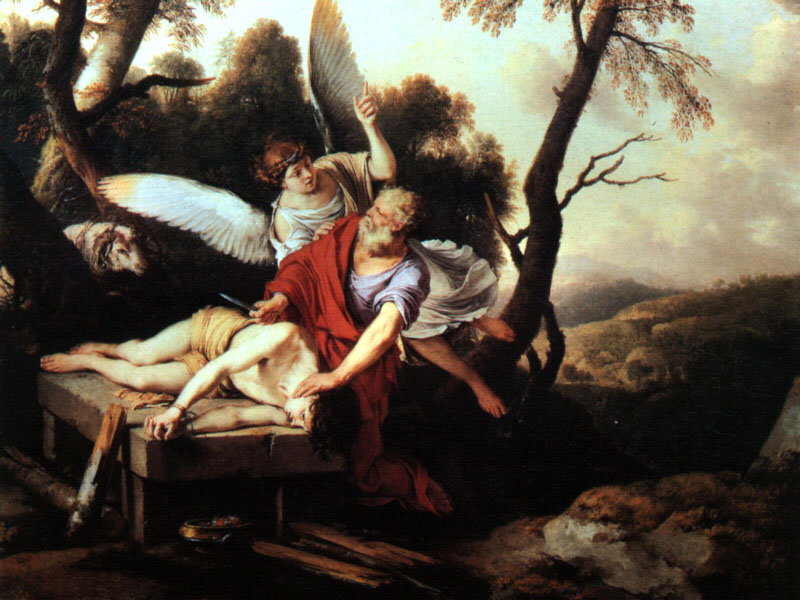
Deeply shallow - why Intelligent Design fails the test of Abraham (and Evolution passes)

I was listening to a discussion on the train last week, involving someone talking to his friends about some kind of alternatives to evolution event he'd been to. The people talking obviously had some feel, some care, for truth; and they were clearly inclining towards a view that while Creationism wasn't very convincing, Intelligent Design was at least interesting and maybe it should be given more equal status with Darwinian evolution.


While I kept my mouth shut all the way until they got off at Wimbledon (I am English, after all), I would really like to talk to people like them - reasonable people of faith, who might be considering the pros and cons of Intelligent Design, and offer them a line of argument which may in some ways make more sense to them than to the average evolutionist.

Some years back I was reading a Danish writer who was talking about God's test of Abraham, when he asks him to sacrifice his first-born son Isaac. Now, even as an occasionally resentful second son, I've never liked this episode - in fact I suspect it contributed to my departure from religion. But some - probably misunderstood - memory of his interpretation of the story as a challenge to choice or commitment stuck in my mind, to resurface from time to time.

Another idea that had stuck in my mind was a quotation that had also taken up long term residence there:
"If it could be proved that any part of the structure of any one species had been formed for the exclusive good of another species, it would annihilate my theory, for such could not have been produced through natural selection."
(Charles Darwin - The Origin of Species, 1859, Chapter 6 - Difficulties On Theory, page 201)

Think about how western culture saw nature up to the moment when Origin was published. The general approach was to seek - and find - examples of Divine Providence in the ingeniously helpful disposition of nature. As Darwin continues in the next sentence, "Although many statements may be found in works on natural history to this effect, I cannot find even one which seems to me of any weight."

A few pages earlier, he does something similar:
"If it could be demonstrated that any complex organ existed, which could not possibly have been formed by numerous, successive, slight modifications, my theory would absolutely break down"
(ibid, page 189)

This is just as challenging - an entire strand of Natural Theology had been built on the basis that this was simply not true, including William Paley's well known Watchmaker Analogy.

So Darwin is going out of his way to give opponents a chance to "annihilate" or "absolutely break down" his theory - if they cannot, the world must be very different from what they think. And this is not any old "theory", this is his life's work (it is 28 years since his voyage on the Beagle started him on this road) which, he must have realised, could more or less immortalise his family name. This theory is, almost literally, his baby.

Eventually I made a illuminating connection between these two ideas. Darwin's invitation to his readers to "annihilate" his theory takes similar courage to that of Abraham offering to sacrifice his son - each is offering the destruction of their life's greatest achievement, and of their nearest hope to immortality in this world. And each is driven by a greater love - Abraham's, of God, and Darwin's, of truth.

Now, let's look at Intelligent Design. Whereas Darwin said, in effect, that the natural world we live in is totally different from how we thought it was, proponents of Intelligent Design say that it is almost identical but somewhere, somehow, there is something that will demonstrate Irreducible Complexity or Specified Complexity - but it appears that they do not even seek proposals for actual research.

Frankly, this reminds me an ancient TV sketch where Rowan Atkinson parodies a famous science fiction theme by explaining, over a cup of tea, that he comes from a parallel Earth on precisely the other side of the sun, where everything is just like this earth - except that the gearknob of their Mini Metro has little dimples in it.

Prove me wrong - show me one sentence anywhere in Intelligent Design which shows such courageous love of truth as Darwin's clear and self-imposed tests, and I will revise my views.

But until then, I firmly believe that ID has as much relationship to a brave and beautiful scientific theory as Caligula's horse Incitatus had to democratically elected leadership.

Wednesday, December 09, 2009

Open Letter in Support of WIPO treaty for People who are Blind or have other Disabilities

Dear Judit,

I would like to support the open letter in support of the WIPO treaty, without hesitation.

My credentials for signing this petition are as the co-author of three Wrox books

Francis Norton.

Wednesday, February 25, 2009

To love is to fear

Such sad news about the death of David and Samantha Cameron's little son, Ivan. It's hard to imagine the horror of hearing such a diagnosis for your son, the hard slog of caring for and loving him, the sorrow of finally losing him.

And time, of course, to consider all the other hidden heroes, quietly getting on with it like Claire Bates, whose very personal response to Ivan's death is almost unbearably moving.

Wednesday, November 26, 2008

Traffic in India

It takes about 25 minutes to drive back from our temporary office in the Eon Free Zone to the Central Park Hotel in downtown Pune, and as far as I can tell there isn't a second when I'm not hearing car horns in action.

Back in London I'd be distressed - horns there generally mean anger or imminent collision. Here it feels more that they are simply a way of gently nudging your fellow road users. Nobody follows the rules much, there's no lane discipline, yet curiously no visible anger or discourtesy, no audible screeching of brakes, and the bikes keep weaving through the road with their one, two, three or even four helmet-less passengers chatting away cheerfully.

It seems to me that it's a kind of non-aggressive anarchy. You don't follow the written rules much, but you have a lot of respect for the unwritten ones, of keeping people alive and property undamaged and tempers cool. 

I wonder if Gandhi ever talked about the traffic?

Wednesday, January 16, 2008

Opting out off organ donation - a helpful proposal?

So our Prime Minister thinks it should be assumed that we are all willing to donate our organs to medicine unless we explicitly opt-out or our families object.

Though I'm not a great fan of yet another state intrusion into a pretty damn personal realm, on consideration I think I'm coming round to this idea.

After all, symmetry and reciprocity are always good ingredients for any ethical recipe. And it seems to me that there is an implicit assumption that we would be willing organ recipients, though of course some have principled objections to that, too.

So perhaps it would be helpful, in more ways than one, to include on the opt-out form this second question:
Would you be willing to accept a donated organ if it was determined that you needed one but, due to unconsciousness or other problems, you were not in a position to give your consent?
Personally, I'm willing to donate. It's right there, in writing. So I feel free to accept. And to indulge myself with perhaps odiously smug comments on the matter.

Tuesday, July 10, 2007

Republican virtues

I may not believe in God, but I can understand and respect the urge, in those who do, to seek his forgiveness for a serious sin. A touch of humility from those in power is always refreshing to the rest of us.

But passing on the news that you have in fact received not only your wife's but also God's forgiveness seems to me to reflect a slightly different virtue.

Monday, May 28, 2007

Revenge of the Zimmers

A band of OAPs with a combined age of over 3,000 have recorded The Who's "My Generation" for BBC 2's Power to the People programme, which I look forward to watching tonight at 9 o'clock.

The video is amusing and moving, and has created a massive stir. And if you feel that a 90-year old singing "hope I die before I get old" is in dodgy taste, try and remember how you felt the first time you heard Bono's "tonight thank God it's them instead of you". There are more important things to feel uncomfortable about - that's the point of this exercise.

It makes me proud to be a BBC licence payer. If not so proud of being part of a society that regards our elderly as an embarrassing expense.